

Our Vision
Recognizing and naming how trauma and adversity impact the adult learner generates a critical brain-based perspective and lens through the which the college builds upon skills of resilience to orient pedagogy, support services, and holistic institutional practices encouraging academic access and success for all students.
FEATURED RESOURCES
Explore key materials, research, and handbooks designed to support trauma-informed practices and student success in higher education.

Trauma-Informed in Higher Education video
A brief overview of the rationale and definition for trauma-informed education in the context of higher education.
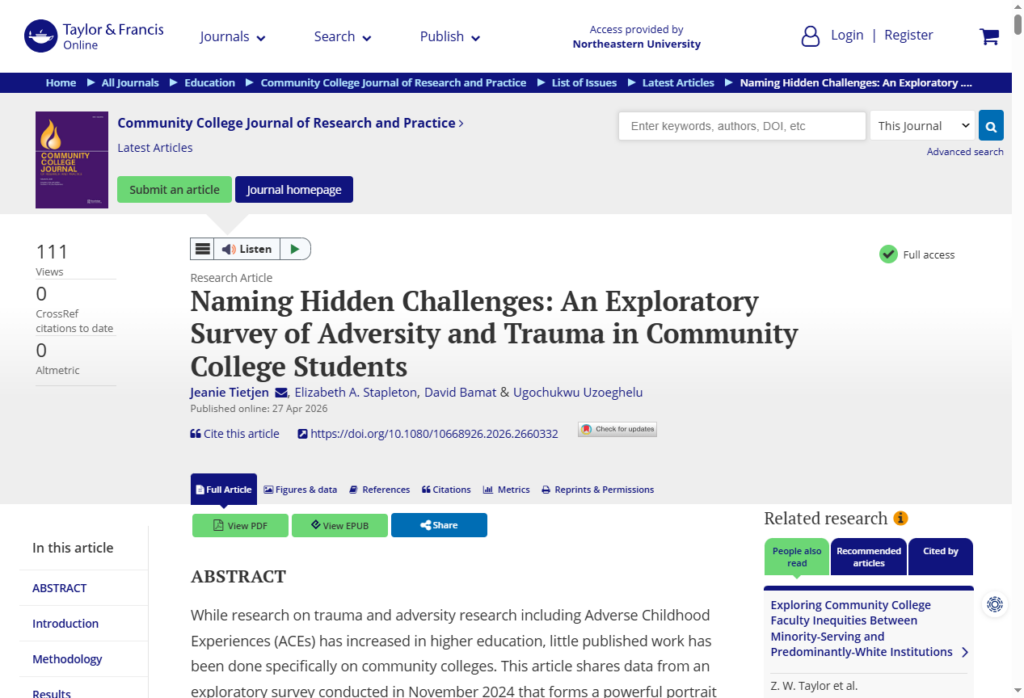
Naming Hidden Challenges: An Exploratory Survey of Adversity and Trauma in Community College Students article
This article shares data from an exploratory survey conducted in November 2024 that forms a powerful portrait combining basic needs, adverse childhood experiences and trauma.
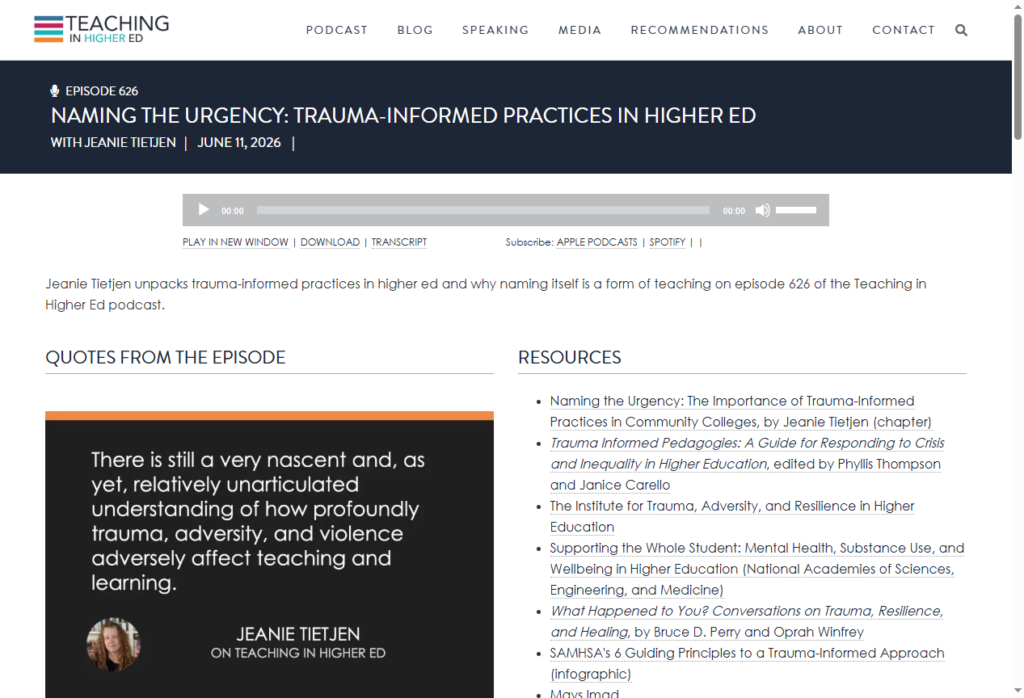
Naming the Urgency: Trauma-Informed Practices in Higher Ed podcast
During this episode of Teaching in Higher Ed, Dr. Jeanie Tietjen unpacks trauma-informed practices in higher ed and why naming itself is a form of teaching.
Learning Brain/Survival Brain in a College Setting video
This video explores how educators can leverage neuroscience and trauma-informed teaching practices to calm students’ survival brains and foster an environment where effective learning can thrive.
insights from the institute
“And this is the urgency, this is the core of the movement beginning to take hold nationwide in postsecondary education: trauma-informed higher education means seeing that trauma, adversity, and violence already exist as consequential forces in the lives of students as well as in the culture and practices that constitute higher education. Inadequate recognition of this prevalence undermines educational reform because it fails to see in whole or in part the fundamental mechanisms that either support or dysregulate cognition, relationships, and behaviors. Incorporating awareness of trauma and adversity also reveals strategies that contribute to academic resilience vital to authentic equity and inclusion in higher education and the health and well-being of our national workforce, citizenry, and community.”
-Tietjen “Naming the Urgency”
Areas of Support that We Cover

Neurobiology 
Trauma Informed Pedagogy 
Trauma Informed Student Services 
Community College 
Adverse Childhood Experiences (ACE) 
LGBTQ & Gender Diversity 
Black, Indigenous, and People of Color (BIPOC) 
Veterans & Military Affiliated 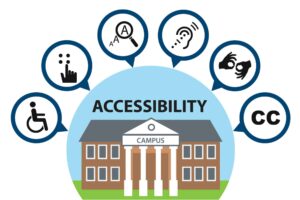
Accessibility 
Depression, Anxiety, Post-Traumatic Stress 
Resilience Factors 
Basic Needs (In)Securities 
Substance Use Disorders